
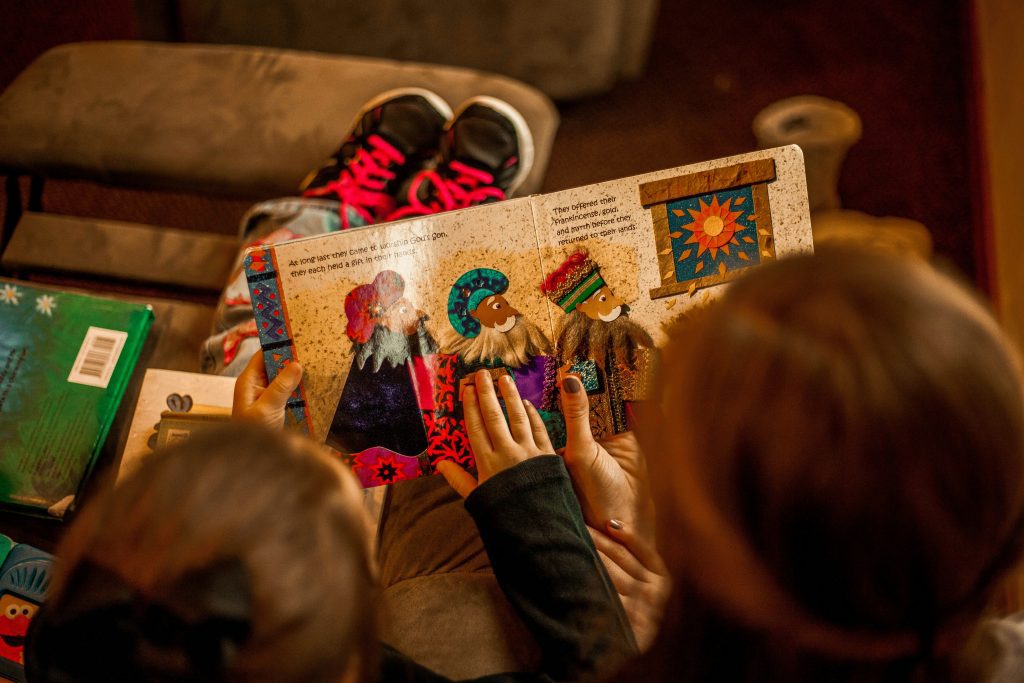
Reading with your child should feel like a treat, not a task. But it’s completely normal for story-time to sometimes turn into a battle of wills, especially if your child is reluctant to pick up a book or finds reading a bit of a struggle. The good news is that a few small changes to how you approach reading together can make all the difference. From setting a cosy routine to embracing silly voices, here are some simple, practical tips to help turn reading into a moment you both look forward to.
12 practical tips to make story-time something your child looks forward to
 1. Create a routine
 1. Create a routine
Setting routines for story-time is a great idea for getting your child in the mood for reading. Choose a particular time of the day, perhaps at bedtime, that you dedicate to reading. That will become your special time together to travel into different worlds – after a long day, this can be as relaxing for children as it is for parents!
2. Let your child lead you
 2. Let your child lead you
Try paying attention to what your child needs when reading, what makes them happy while having a book in their hands. Would they like to read to you? Great! If they would rather you read to them, that is also completely fine. Listening to you can help them develop a love of reading just as much. It will still expand their vocabulary, allow their imagination to run wild, and build a positive memory of books and reading that will last a lifetime. Overtime, you could ask if they would like to take turns reading, which will allow them to challenge themselves a bit without feeling too much pressure.
3. Use your voice
 3. Use your voice
Using different voices for all the characters is great fun. Even if your impression of a cowboy, a troll or a frog is a little shaky, this is a great way to keep your child’s attention. The sillier the better!
4. Keep it light and fun
 4. Keep it light and fun
This is especially important for children who are struggling with their reading or are reluctant to pick up a book. Keeping it fun and easy means they won’t see it as a chore or homework. When reading for pleasure, you can still help them if they make a mistake, but remember that constant corrections can put them off and make the experience less enjoyable!
5. No book is a bad book!
 5. No book is a bad book!
You might disagree with your child’s book choices, but the key is to keep that a secret if you can! If your child wants to read a book that you find a bit silly for example, still encourage them to go ahead (provided it is suitable for their age). All that matters at this stage is that your child has an interest in reading – their preferences might well change over time!
6. Ask questions
 6. Ask questions
Books can really be an opportunity for children to develop their own thoughts and opinions, as well as a chance to empathise with others. As you read together, ask your children questions that will encourage them to think about the characters e.g. ‘what would you do if you were in this character’s shoes?’ or ‘how do you think they feel’? This will not only make reading more active and engaging but also allow your child to express their feelings and gain confidence.
7. Rereading is okay!
 7. Rereading is okay!
Sometimes children like to reread the same books several times and that can be very boring for you! But children gain confidence by reading familiar books more than once, and it is still good practice for them.
8. If not stories, what about facts?
 8. If not stories, what about facts?
If your child is struggling to get into stories, try factual books! Science, history, geography – there is something for every curious little mind! Factual books also make it easier to keep reading short if your child gets tired quickly or easily loses concentration. They won’t have to follow a plot as they can easily move on to the next exciting fact!
9. Do some background knowledge
 9. Do some background knowledge
A little background about a subject can really help your child’s comprehension when reading. So if you are reading about elephants, maybe you can find a quick YouTube video about elephants, and then read the book together.
10. Try out tracking
 10. Try out tracking
If your child is struggling with a page, follow the words they read with a finger. This helps keep their eyes moving smoothly from one word to the next.
11. You don’t have to always finish books
 11. You don’t have to always finish books
If children are not enjoying a book, it is completely fine to stop reading! It is really important that children feel free to move on to something different – being in control will make them feel positive about their relationship with reading. You can always have fun making up the end of the story!
12. End on a cliff-hanger
 12. End on a cliff-hanger
If reading a chapter book, try to stop at an exciting point in the story. Have fun guessing what might happen next. That will make your child even more eager to pick up the book the next time!
Ready to start reading?
At the end of the day, there’s no single “right” way to read with your child. What matters most is finding an approach that works for your family and keeps the experience enjoyable for both of you. Whether that means rereading the same story for the tenth time, ditching a book halfway through, or swapping fiction for facts about dinosaurs, every bit of time spent together with a book is time well spent. So relax, have fun, and let your child’s curiosity lead the way.
But if you need a bit of extra help and you’re based in London, our volunteers offer free reading sessions every week to children aged up to 11.
